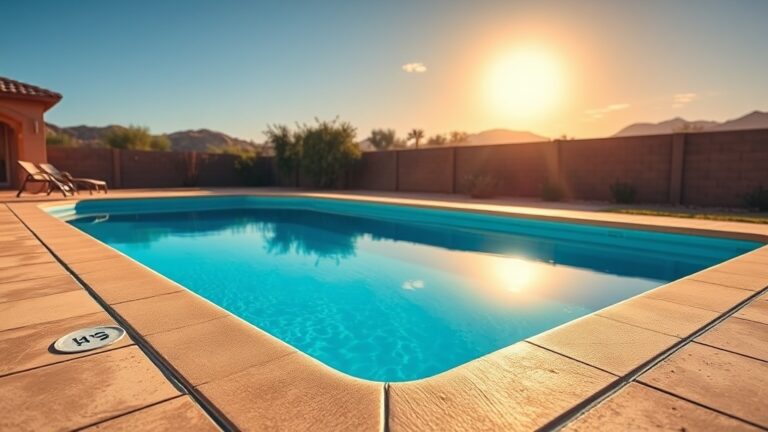
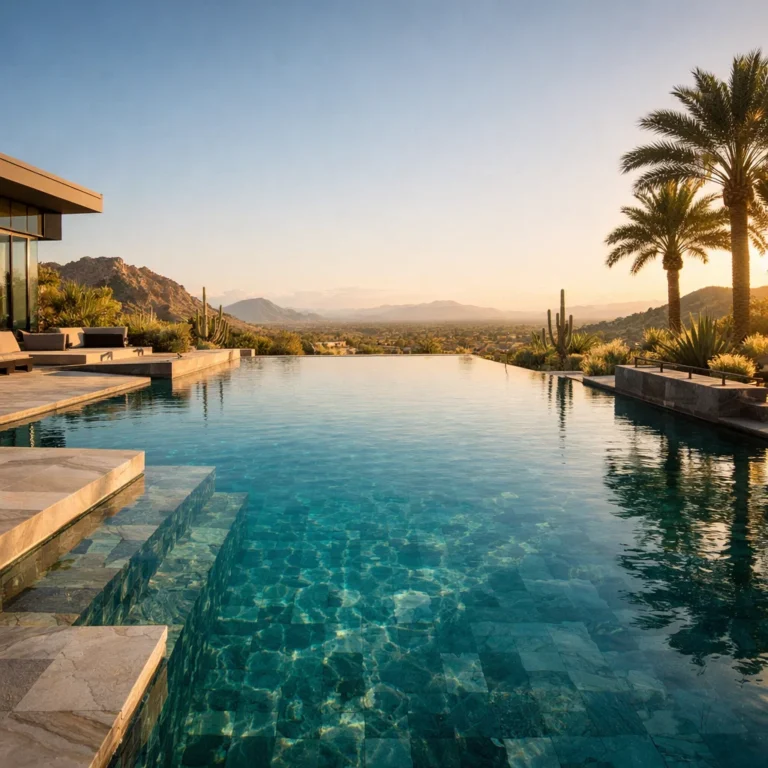
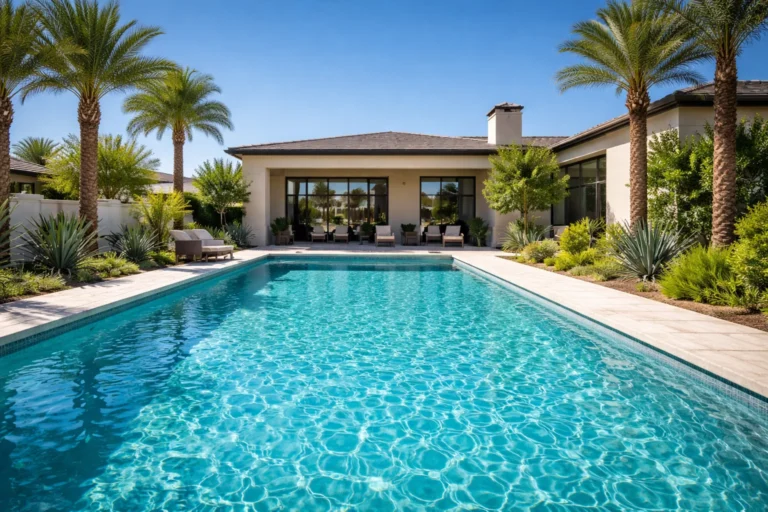
There’s a quiet crisis happening in backyards across the Valley: your pool is drinking itself dry. And no, it’s not just a small leak. The relentless Arizona sun and bone-dry air are playing a dirty trick. We’re talking about evaporation – a force that can literally drain inches of water from your pool every single week. I’ve seen it too many times to count; homeowners in Paradise Valley scratching their heads, wondering where all that water went.
Why is my pool losing 2 inches of water a week?
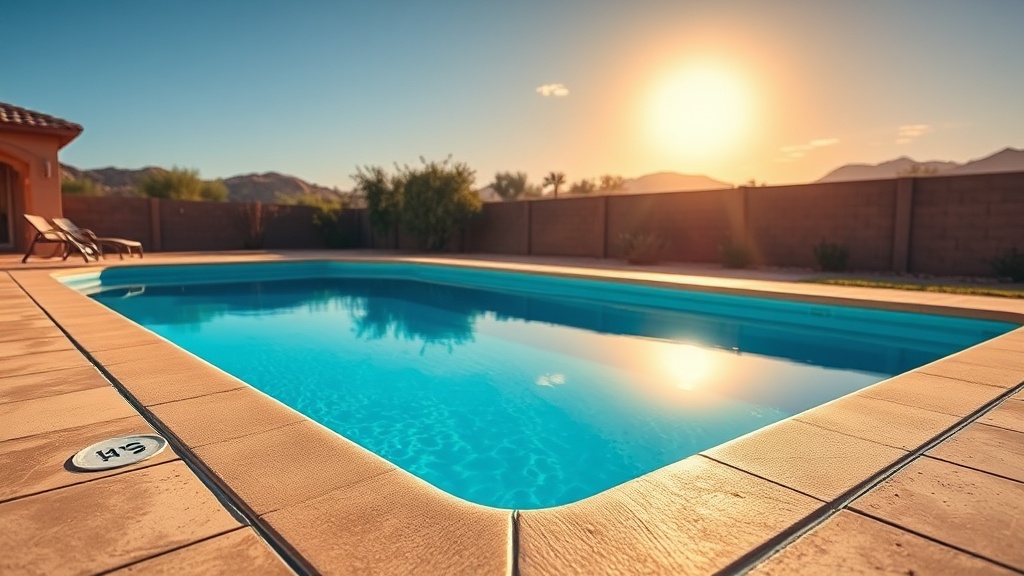
Let’s cut to the chase. That disappearing water isn’t magic, it’s physics. Here in Phoenix, with temperatures routinely hitting 110°F and humidity levels often dipping below 5%, the conditions are tailor-made for rapid evaporation. Think of your pool’s surface as a giant, flat skillet. The intense UV rays from the Arizona sun act like a burner, heating the water. Simultaneously, the dry air acts like a powerful fan, wicking away that moisture as vapor. It’s a phenomenon we see amplified every summer.
Combine that with the notorious Valley winds, especially during monsoon season, and you’ve got a recipe for significant water loss. A 15,000-gallon pool, a common size around here, can easily lose 2 to 3 inches of water per week in peak summer. This isn’t a guess; this is the harsh reality of owning a pool in our desert climate. On top of that, the dust kicked up by haboobs can clog filters and increase chemical usage, adding insult to injury.
What’s more, the water loss isn’t uniform. Factors like wind speed, surface area, water temperature, and even the surrounding landscaping play a role. A pool with a large surface area exposed to wind will naturally lose more water than a smaller, more sheltered one. It’s a constant battle against the elements, and frankly, it’s one many homeowners are losing without realizing it.
How much water does a pool in Arizona lose to evaporation?
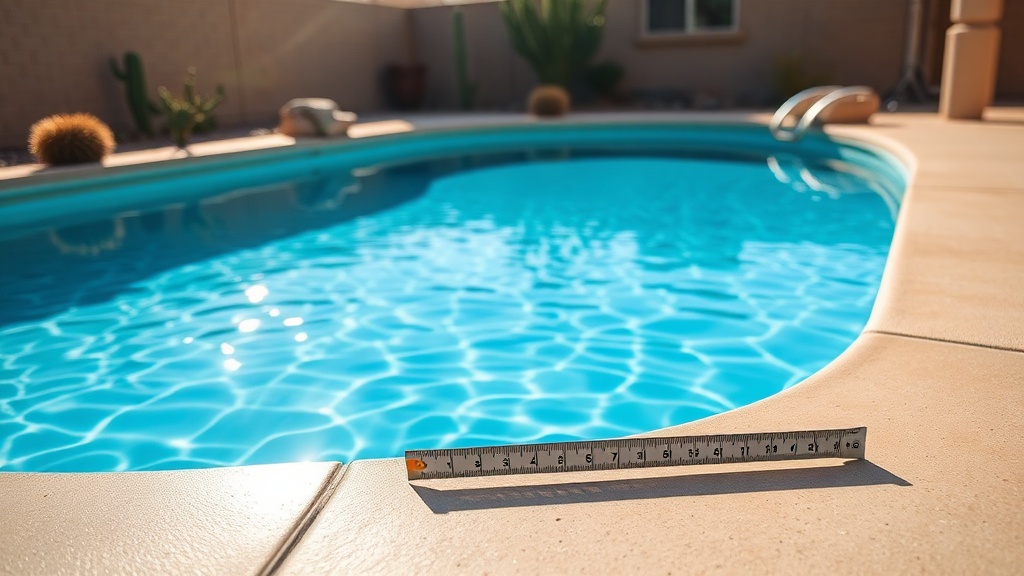
The numbers are, frankly, staggering. We’re not talking about a few gallons here and there. In the Phoenix Metro area, an average uncovered swimming pool can lose up to 6 feet of water annually. Let that sink in. 6 feet. For a standard 15×30 foot pool with an average depth of 5 feet, that’s a staggering 22,500 gallons lost to evaporation each year. That’s enough water to fill a smaller backyard splash pad multiple times over. My own experience shows that numbers this high often shock clients, but the math doesn’t lie.
Competitors might give you a vague “quarter-inch a day” average, but that’s for a different climate. Here in the Valley, especially during those brutal summer months and the dusty haboobs of monsoon season, that number can easily double, even triple. I’ve seen pools lose upwards of 3 inches in a single week during extreme heat waves. The Arizona Department of Water Resources confirms these high rates, with desert regions seeing significant losses. This dry climate can easily produce 100 inches of water evaporation per year – that’s nearly the entire volume of water in a typical pool!
This isn’t just about topping off your water level. Consider the cost. If your SRP or APS rates are climbing, imagine paying to heat water that’s just going to evaporate into the ether. It’s like pouring money down the drain, literally. We’ve seen homeowners in Scottsdale and Paradise Valley grapple with bills that skyrocket simply because they’re constantly replacing evaporated water – water that also carries away dissolved chemicals and heat. This constant replenishment also impacts water chemistry; adding fresh water frequently dilutes your carefully balanced chemicals, leading to more frequent adjustments.
Here’s a quick breakdown of what you can expect:
| Condition | Estimated Weekly Water Loss (Average 15,000 Gallon Pool) |
|---|---|
| Mild Spring/Fall | 1-1.5 inches |
| Hot Summer (100°F+) | 2-3 inches |
| Windy Conditions | +0.5-1 inch |
| Covered Pool | 0.5-1 inch (significantly reduced) |
This data paints a clear picture: ignoring evaporation in Arizona is a costly mistake. The actual ROI on simple preventative measures is astronomical when you factor in water, chemical, and heating costs.
What are the best ways to prevent pool evaporation in Arizona?
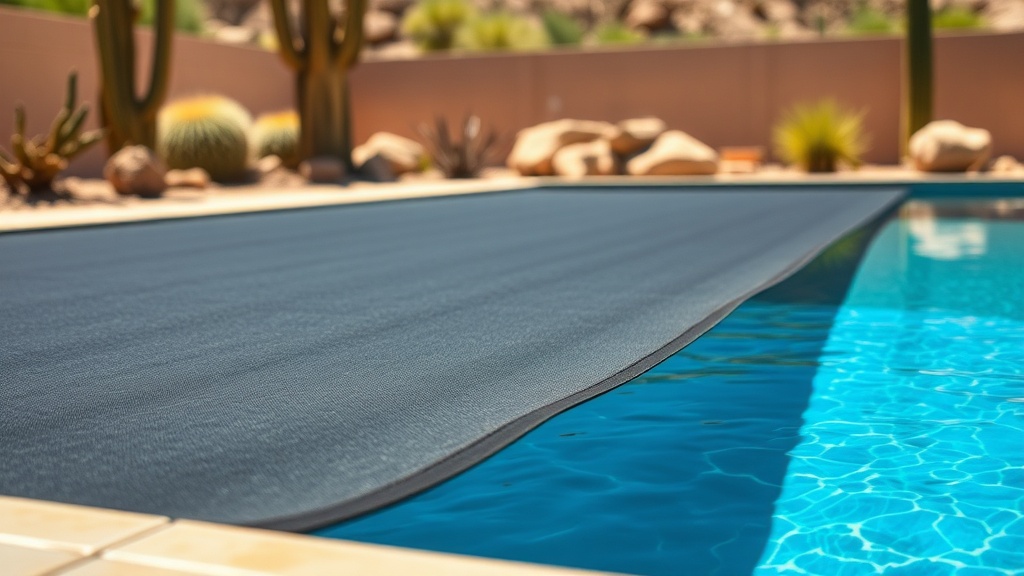
Alright, let’s talk solutions. You’re not powerless against the desert’s thirst. The absolute, undisputed champion in the fight against evaporation is a pool cover. And I’m not talking about just any flimsy tarp. I mean a properly fitted, high-quality pool cover – whether it’s a manual solar cover or an automatic system.
Why is it number one? Simple physics. A cover acts as a barrier, physically preventing the water surface from interacting directly with the hot, dry air and wind. It traps the moisture, keeping it within the pool. In Arizona’s harsh UV environment, this barrier is critical. We see this principle applied everywhere, from keeping your car cooler to preserving moisture in soil. Why would a pool be any different?
But what about other methods? Absolutely. Reducing splashing is key. Think about how much water gets flung out during energetic pool parties. Minimizing this splash-out directly cuts down on immediate water loss. Simple techniques like encouraging less vigorous play or installing splash guards can make a difference.
Another factor is windbreaks. While not always feasible in a backyard setting, strategically placed landscaping or fencing can help reduce the wind’s direct impact on the water’s surface. It’s about managing airflow – something crucial for everything from cooling homes to, apparently, keeping pools full.
Do pool covers really prevent evaporation?
Let me be blunt: If you own a pool in Arizona and you aren’t using a pool cover, you’re leaving money, water, and sanity on the table. Yes, they absolutely prevent evaporation. The science is undeniable. A good pool cover can reduce water loss by as much as 95%. That’s the difference between losing inches of water weekly and losing mere fractions of an inch. This level of reduction is what makes them the single most effective tool in our arsenal.
Think about it. The Arizona Department of Water Resources recommends covers specifically for desert regions precisely because they drastically reduce evaporation. These aren’t just simple blankets; modern pool covers, like those made with durable materials designed to withstand the intense Arizona sun – think high-grade vinyl or reinforced polyester – create a physical barrier. They prevent the direct transfer of heat and moisture from the water to the atmosphere.
We’ve seen countless clients in the East Valley balk at the idea, thinking it’s too much hassle. But here’s the kicker: the time and money saved on water replacement, chemical balancing, and even reduced heating costs far outweigh the perceived inconvenience. A solar cover, for instance, not only stops evaporation but also captures solar heat, potentially reducing your heating bill – a big win when dealing with APS rates. It’s a win-win, really. For those considering automated covers, the convenience factor is even higher, often leading to 100% usage compliance.
Here’s a quick comparison table to illustrate the effectiveness:
| Method | Effectiveness Against Evaporation | Initial Cost (Est.) | Maintenance Effort | Additional Benefits |
|---|---|---|---|---|
| Pool Cover | Very High (up to 95%) | $300 – $2000+ | Low-Moderate | Heat retention, chemical savings |
| Reducing Splashing | Moderate | Low | Low | Minimal |
| Windbreaks | Moderate | Variable | Low | Aesthetic |
| Fountain/Feature Off | Low | N/A | N/A | Minimal |
This table clearly shows that while other methods offer some benefit, a pool cover remains the undisputed champion for combating Arizona pool evaporation.
How can I reduce water loss from my pool without a cover?
Look, I get it. Sometimes, a full pool cover isn’t in the immediate plan. Maybe budget is tight, or you’re waiting for a specific installation. But don’t throw in the towel just yet. There are still steps you can take to mitigate that relentless evaporation. I’ve guided clients through these smaller steps, and while they don’t replace a cover, they do help.
First, turn off water features. Those beautiful waterfalls and jets that look so serene? They’re significantly increasing the water’s surface area exposure to the air and adding agitation, which accelerates evaporation. During the hottest parts of the day or when you’re not actively using the pool, shut them down. This is particularly true for infinity edges or negative-edge pools – beautiful, but evaporation magnets.
Second, manage the splash zone. This is where your pool party habits come into play. Encourage guests to enter and exit the pool gracefully, rather than diving and splashing wildly. While it seems minor, consistent splashing adds up over time. Think of it as a low-effort way to conserve water. We’re talking about gallons lost with every cannonball.
Third, consider your pool’s temperature. While we all love a warm pool, excessively hot water evaporates much faster. If you’re heating your pool, aim for a reasonable temperature – say, 80-85°F. Pushing it higher, especially during the day, is just feeding the evaporation monster. This is particularly relevant if you have a solar heating system; letting it run uncontrolled can lead to overheating and increased water loss. I’ve seen solar-heated pools become almost too hot to touch, and they lose water at an alarming rate.
Finally, and this is crucial, regularly check for leaks. Evaporation is a certainty in Arizona; leaks are not. A persistent, rapid drop in water level beyond what’s explainable by evaporation could signal a hidden plumbing issue or a crack. While evaporation can account for inches per week, a leak can drain your pool in days. Differentiating between the two is critical. If you suspect a leak, call a professional immediately. We use methods like dye testing and pressure testing to pinpoint hidden issues long before they become catastrophic. It’s a common misconception that a small leak isn’t a big deal; in reality, even a slow drip can waste thousands of gallons a year and damage your pool structure.
Frequently Asked Questions (FAQ)
Why does my pool water level drop so fast in Arizona?
The primary reason is the extreme combination of high temperatures, low humidity, and prevalent winds common in Arizona. These conditions create a perfect storm for rapid water evaporation from the pool’s surface, much like leaving a shallow dish of water out in the desert.
How many gallons of water can a pool lose per day in Phoenix?
During peak summer months, an uncovered 15,000-gallon pool in Phoenix can lose between 10-20 gallons of water per day, translating to several inches per week, purely due to evaporation. This rate can be significantly higher during heat waves or strong winds.
Are pool covers expensive in Arizona?
The cost of pool covers varies. Basic solar covers are relatively inexpensive, starting around $300, while more robust automatic covers represent a significant investment, potentially costing several thousand dollars. However, the long-term savings on water and chemicals often provide a strong return on investment (ROI) in Arizona’s arid climate, making them a worthwhile expense.
Do pool covers completely stop evaporation?
No pool cover can stop evaporation 100%, but a high-quality, well-fitted cover can reduce water loss by up to 95%. This dramatically minimizes the need for constant water top-offs and chemical adjustments, significantly conserving your resources.
How do I know if my pool is losing water from a leak or evaporation?
Monitor the water level drop over 24-48 hours with the pump running and then with the pump off. If the level drops significantly when the pump is off, it indicates a leak somewhere in the plumbing system. Consistent loss with the pump running is likely evaporation, though a leak could still be present. Documenting this difference is key before calling a pool service professional to help diagnose the exact cause.