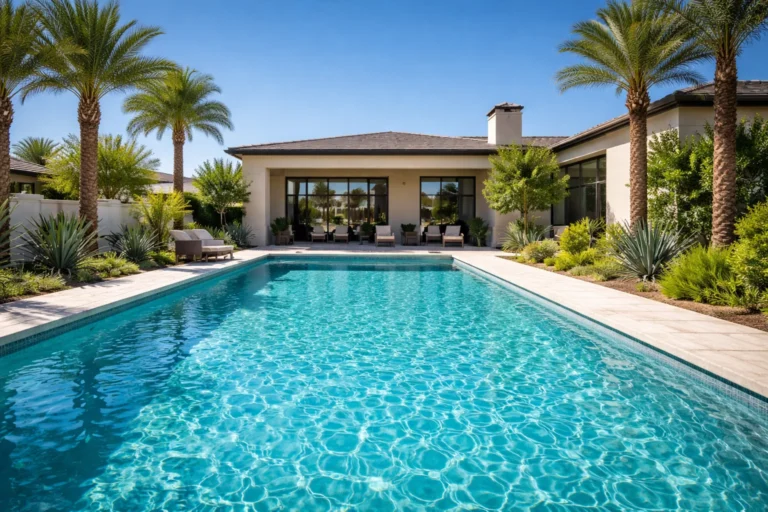
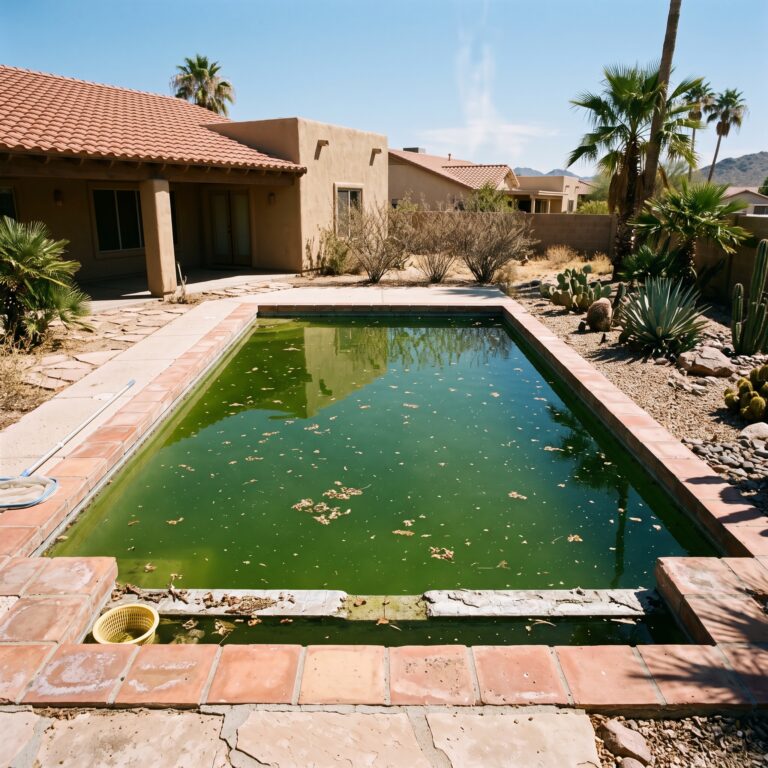
Phoenix pool opening service – your gateway to desert swimming paradise
Living here in The Valley means one thing’s certain: when that brutal desert heat cranks up to 115°F, your pool becomes your lifeline. But getting that crystalline oasis ready after months of winter neglect? That’s where a professional pool opening service Phoenix AZ comes into play – and trust me, after 15 years in this desert furnace, I’ve seen what happens when folks try to wing it.
Here’s the deal: Pool opening isn’t just removing a cover and hoping for the best. It’s a systematic process that transforms your dormant water feature into a safe, sparkling swimming haven. The right swimming pool service Phoenix can mean the difference between diving into paradise and dealing with a green, chemical nightmare that’ll ruin your entire monsoon season.
What is included in a pool opening service?
A comprehensive pool opening service Phoenix transforms your winter-closed pool into a summer-ready oasis through systematic inspection, cleaning, and chemical balancing – typically completing in 2-3 hours what would take homeowners an entire weekend.
Equipment inspection and startup kicks off every professional opening. Your technician checks all mechanical systems – pumps, filters, heaters, and pool automation equipment. They’re hunting for winter damage, worn seals, or components that need replacement before you’re swimming. In Arizona’s extreme climate, equipment takes a beating even during our “mild” winter months when temperatures still swing 40 degrees daily.
Pool cover removal comes next (if you’ve got one). Professional teams don’t just yank off the cover – they carefully pump standing water, clean debris, and inspect the cover for damage. Many Valley residents skip covers due to our minimal winter precipitation, but those who use them know proper removal prevents contamination of that precious water.
Water testing and chemical balancing forms the technical heart of any pool service company Phoenix operation. Your water’s been sitting for months, potentially developing algae, scaling, or dangerous chemical imbalances. Professional pool cleaning Phoenix teams test pH, alkalinity, chlorine levels, calcium hardness, and total dissolved solids. They’ll add chemicals systematically, not dump everything at once like weekend warriors do.
Filter cleaning represents a crucial step most DIYers botch completely. Sand filters get proper backwashing, cartridge filters receive deep-cleaning or replacement, and DE filters get fresh diatomaceous earth. Many pool maintenance Phoenix teams include free filter cleaning as part of their opening package – a service worth $50-75 on its own.
Equipment startup and testing
Swimming pool repair issues surface quickly during equipment startup. Pumps that ran fine last September might refuse to prime after sitting dormant. Heaters develop sensor problems. Pool automation systems lose their programming or communication errors.
Professional technicians run complete system cycles, checking for unusual noises, vibrations, or performance drops. They’ll adjust timer settings for Arizona’s extended swimming season (March through November), verify safety systems function properly, and ensure everything’s optimized for our demanding desert conditions.
Skimming, brushing, and vacuuming removes winter debris accumulation that would otherwise cloud your water for weeks. Even covered pools collect dust, leaves, and the occasional desert visitor (yes, even scorpions appreciate a good soak). Commercial-grade equipment cleans faster and more thoroughly than homeowner tools.
“A proper pool opening service addresses six months of dormancy in a single visit. Skip any step, and you’ll be troubleshooting problems all season long – especially here in Phoenix where our mineral-heavy water amplifies every mistake.” – Carlos Martinez, Senior Pool Technician at Desert Oasis Aquatics
Our simple 3-step process for pool opening success
Step 1: Complete system diagnosis and equipment inspection – We arrive with professional testing equipment and years of desert pool experience. Every pump, filter, heater, and automation component gets thoroughly checked before we touch your water chemistry.
Step 2: Water restoration and chemical balancing – Using commercial-grade chemicals and precise testing, we restore your pool’s chemistry from whatever winter threw at it. This includes shock treatments, pH correction, and alkalinity adjustment specific to Phoenix’s unique water conditions.
Step 3: Final testing and optimization – We run everything through complete cycles, verify all systems operate correctly, and provide you with a detailed report of your pool’s condition plus recommendations for the coming season.
How much does a pool opening service cost in Phoenix?
Pool opening cost Phoenix typically ranges from $150-$400 depending on pool size, complexity, and additional services required during the opening process – a bargain compared to the $800+ you’ll spend fixing DIY mistakes.
Basic pool opening service runs $150-$225 for standard residential pools up to 20,000 gallons. This covers equipment startup, basic chemical balancing, debris removal, and system testing. Most swimming pool service Phoenix companies price this as a flat fee, though some charge extra for unusual equipment configurations.
Premium opening packages cost $250-$400 and include additional services like acid wash, filter replacement, detailed equipment inspection, and extended chemical treatment. These packages make sense for pools that sat untreated all winter or showed signs of algae growth during our unusually wet winter months.
Equipment issues add costs beyond the base service. If your pump died over winter or your heater needs repair, expect additional charges ranging from $100-$500. Smart pool owners budget an extra $200-$400 for potential equipment surprises during opening season.
Here’s a breakdown of typical opening costs across The Valley:
| Service Level | Price Range | What’s Included | Best For |
|---|---|---|---|
| Basic Opening | $150-$225 | Equipment startup, chemical balancing, debris removal | Well-maintained pools |
| Standard Opening | $200-$275 | Above plus filter cleaning, detailed testing | Most residential pools |
| Premium Opening | $250-$400 | Above plus acid wash, equipment inspection | Problem pools or luxury features |
Geographic factors within Phoenix influence pricing significantly. North Phoenix and Scottsdale services often run 10-15% higher due to travel time and clientele expectations. Central Phoenix, Mesa, and Desert Ridge typically offer more competitive rates due to service density and competition.
Seasonal timing affects pricing dramatically. March openings cost 20-30% more due to peak demand as everyone scrambles to get pool-ready before spring training crowds arrive. April and May offer better rates as the initial rush subsides, but you risk equipment shortages if repairs are needed.

When should I schedule your pool opening service?
Phoenix pool opening should happen in late February to mid-March, before the desert heat makes swimming irresistible but while service availability remains high and equipment suppliers maintain full inventory.
Temperature triggers matter more than calendar dates here in The Valley. Once nighttime temperatures consistently stay above 60°F, it’s time to start thinking about opening. This usually happens in late February – earlier than most of the country due to our unique climate patterns and extended swimming season.
March represents the sweet spot for most Phoenix residents. Water temperatures start climbing toward that magical 75°F swimming threshold, equipment has time to stabilize before peak usage, and you avoid the April rush when everyone suddenly realizes summer’s coming fast. Pool service company Phoenix schedules fill quickly once daytime temperatures hit the 80s consistently.
Monsoon season considerations make timing even more critical in our desert climate. You want your pool fully operational and chemically balanced before July’s dust storms and flash flooding arrive. Nothing’s worse than dealing with opening issues while monsoon debris rains down and your SRP bill skyrockets from running pumps overtime.
Consider these timing factors for optimal results:
- Early March: Best availability, moderate temperatures, equipment in stock
- Late March: Higher demand, perfect swimming weather, premium pricing starts
- April: Peak demand, rushed service, 25% price premium
- May: Emergency mode, limited availability, expensive repairs due to parts shortages
Equipment longevity benefits significantly from proper timing. Starting systems gradually in moderate weather prevents thermal shock and mechanical stress that shortens component life. Your pump, heater, and pool automation equipment will reward you with longer service life and fewer emergency repairs.
DIY vs professional pool opening – making the right choice
Professional pool opening saves you 8-12 hours of work while preventing costly mistakes that can damage equipment or create unsafe swimming conditions throughout Arizona’s brutal summer months.
DIY pool opening appeals to handy homeowners who want to save money. Basic opening seems straightforward enough. Remove the cover. Turn on equipment. Add some chemicals. Simple, right? Wrong. Dead wrong.
Here’s what goes sideways fast: Phoenix water is notoriously hard (12-15 grains per gallon in most areas), and balancing chemistry after months of dormancy requires precision. Add too much shock chlorine too fast? You’ll bleach your liner or damage metal fixtures. Miss the pH adjustment? Your expensive equipment starts corroding from the inside out.
Equipment issues multiply during DIY attempts. That pump that won’t prime? Could be a simple air lock or a cracked housing that’ll flood your equipment pad. Pool heaters are particularly finicky after sitting dormant – one wrong move and you’re looking at a $1,200 repair bill instead of a $200 opening service.
“I see more equipment damage from rushed DIY openings than from mechanical wear. Homeowners panic when something doesn’t work immediately and start forcing things. That’s when expensive parts break.” – Maria Gonzalez, Pool Equipment Technician at Valley Pool Pros
Professional advantages go beyond just technical knowledge. Pool opening and closing Phoenix specialists carry insurance, proper equipment, and replacement parts. When something breaks during their service, they fix it at no extra charge. When you break it yourself? You’re buying new parts and paying emergency service rates.
Time investment tells the real story. Professional teams complete most openings in 2-3 hours. DIY attempts typically take 6-8 hours for experienced homeowners, up to 12 hours for newcomers. Factor in multiple trips to pool supply stores, troubleshooting equipment issues, and correcting chemical mistakes, and professional service becomes a no-brainer.
Safety concerns shouldn’t be ignored either. Pool chemicals are dangerous when mishandled. Muriatic acid can cause severe burns. Chlorine gas (from mixing wrong chemicals) can be deadly in enclosed spaces. Professionals know proper handling procedures and carry safety equipment.
Pool maintenance vs pool opening – understanding the difference
Pool opening is a comprehensive seasonal startup service, while pool maintenance focuses on ongoing weekly care to maintain water quality and equipment function throughout Arizona’s extended swimming season.
Pool opening tackles accumulated problems from months of dormancy. Your pool’s been sitting static, developing chemical imbalances, equipment issues, and debris accumulation that regular maintenance can’t address. Opening service fixes these systemic problems in one intensive session rather than gradual correction over weeks.
Pool maintenance Phoenix services handle routine care – skimming, chemical adjustment, filter cleaning, and equipment monitoring. Think of maintenance as preventive medicine while opening is major surgery to restore health after neglect. Most pool maintenance services charge $80-150 monthly for weekly visits.
Chemical approach differs drastically between the two services. Opening requires shock treatments, pH correction, and sometimes acid wash to restore water chemistry from scratch. Maintenance makes small, frequent adjustments to maintain established balance – much gentler on your pool surfaces and equipment.
Here’s how they compare in practical terms:
| Aspect | Pool Opening | Pool Maintenance |
|---|---|---|
| Frequency | Once per season | Weekly/bi-weekly |
| Duration | 2-4 hours | 30-60 minutes |
| Chemical Use | Heavy shock treatments | Light adjustments |
| Equipment Focus | Startup and repair | Monitoring and cleaning |
| Cost | $150-400 one-time | $80-150 monthly |
Equipment priorities shift between services too. Opening focuses on getting dormant systems operational – priming pumps, testing heaters, calibrating automation. Maintenance keeps running systems optimized – cleaning skimmer baskets, backwashing filters, checking chemical feeders.
Many pool cleaning Phoenix companies offer combined packages that include opening service plus ongoing maintenance. These deals often save 15-20% compared to separate services and ensure continuity of care throughout the season.
Common pool opening problems in Phoenix
Algae blooms represent the most frequent issue during Phoenix pool openings, especially after our increasingly wet winter seasons that provide perfect growing conditions for stubborn desert algae strains.
Green pool water shocks new Arizona residents who expect crystal-clear results immediately. Desert algae differs from other climates – it’s heat-resistant and thrives in our mineral-rich water. Standard shock treatments often fail against established algae colonies that developed over winter months.
Equipment failures spike during opening season due to Phoenix’s extreme temperature swings. Plastic components become brittle after months of 40-degree daily temperature variations. Pump seals dry out and crack. Pool heater heat exchangers develop leaks from mineral buildup in our hard water.
Here’s the breakdown of common opening problems we see:
- Algae blooms (40% of openings): Green, yellow, or black algae requiring specialized treatment
- Pump priming issues (25%): Air locks, cracked housings, or worn impellers
- Chemical imbalances (20%): pH crashes, alkalinity problems, calcium scaling
- Filter problems (10%): Clogged cartridges, damaged grids, sand channeling
- Equipment damage (5%): Heater issues, automation failures, plumbing leaks
Mineral scaling creates unique challenges in The Valley. Our water contains high levels of calcium and magnesium that precipitate out when chemistry goes wrong. White, chalky deposits coat tile lines, clog filters, and damage equipment. Professional pool repair Phoenix services see more scaling issues than anywhere else in the country.
Salt water pool systems face additional complications during opening. Salt cells accumulate calcium buildup that reduces chlorine production. Many homeowners don’t realize their salt system stopped working properly over winter until they’re dealing with persistent algae problems weeks into the season.
“Phoenix pool openings are like detective work. You’re diagnosing problems that developed slowly over months while everything was sitting dormant. Miss one issue, and it cascades into bigger problems once the heat hits.” – Robert Chen, Master Pool Technician at Cactus Pool Services
Prevention strategies make huge differences. Pools that receive proper closing service in November face fewer opening problems. But many Valley residents skip closing service since we rarely freeze, leading to more complex spring startups.
Finding the right pool opening service in Phoenix
Quality pool service company Phoenix selection requires evaluating licensing, insurance, local experience, and customer reviews from verified Valley residents who understand our unique desert pool challenges.
Licensed contractors protect you legally and financially. Arizona requires pool service companies to carry proper licensing through the Registrar of Contractors. Check license status at azroc.gov before hiring anyone. Unlicensed operators can’t pull permits for equipment repairs and leave you liable for accidents.
Insurance verification matters more than most homeowners realize. Pool equipment is expensive. Professional liability coverage protects you when something goes wrong during service. General liability covers property damage. Many companies claim insurance they don’t actually carry – ask for certificates and verify directly with insurers.
Local experience counts heavily in Phoenix’s unique environment. Companies that primarily serve Tucson or Flagstaff don’t understand Valley-specific challenges like our mineral-heavy water, monsoon debris patterns, or equipment stress from extreme heat. Look for established Phoenix pool maintenance providers with 5+ years of local operation.
Customer reviews require careful evaluation. Many online reviews come from outside Arizona and don’t reflect local conditions. Prioritize feedback from verified Phoenix residents, especially those mentioning specific challenges like algae problems, equipment issues, or seasonal service quality.
Service guarantees separate professional operations from fly-by-night operators. Quality companies stand behind their work with written guarantees covering chemical balance, equipment startup, and return visits if problems develop within the first week.
Here are key questions to ask potential providers:
- How long have you been serving the Phoenix area specifically?
- What’s your licensing status and insurance coverage?
- Do you guarantee water clarity within 48 hours?
- What equipment brands do you service and stock parts for?
- How do you handle algae problems specific to Arizona water?
- What’s included in your opening service vs. additional charges?
Price shopping alone leads to disappointment. The cheapest provider often cuts corners on chemical quality, rushes through equipment checks, or charges hidden fees for “unexpected” issues. Focus on value – comprehensive service that prevents problems rather than bargain pricing that creates them.
Equipment expertise varies dramatically between companies. Some specialize in basic chemical service while others handle complex repairs on variable-speed pumps, automation systems, and energy-efficient equipment. Match the provider’s capabilities to your pool’s complexity level.
Pool opening checklist – what to expect from professionals
Professional pool opening service Phoenix follows a systematic 15-point checklist that ensures every component functions properly before declaring your pool swim-ready for Arizona’s demanding summer season.
Pre-opening inspection (Items 1-5):
- Pool cover removal and storage inspection
- Skimmer and return line debris clearing
- Equipment pad safety assessment
- Electrical connection verification
- Plumbing leak detection around equipment
Equipment startup sequence (Items 6-10):
- Pump priming and circulation testing
- Filter system cleaning and inspection
- Pool heater startup and safety checks
- Automation system programming and calibration
- Safety equipment testing (alarms, covers, fencing)
Water treatment process (Items 11-15):
- Complete water chemistry testing (8-parameter analysis)
- Shock treatment and algaecide application
- pH and alkalinity adjustment for Phoenix water
- Calcium hardness balancing
- Final water clarity verification and system optimization
Each step builds on the previous one. You can’t properly balance chemicals until circulation runs correctly. Equipment won’t start reliably without proper electrical connections. Professional technicians understand these dependencies and follow logical sequences that prevent problems.
Documentation matters for warranty and insurance purposes. Quality swimming pool service Phoenix companies provide written reports showing before/after chemical readings, equipment condition assessments, and recommendations for ongoing care. Keep these records – they’re valuable for troubleshooting future issues.
Timeline expectations help you plan accordingly. Standard openings take 2-3 hours for pools in good condition. Problem pools requiring acid wash, equipment repair, or extensive algae treatment can take 4-6 hours. Discuss timing upfront to avoid scheduling conflicts.
Weather considerations affect service quality. Opening during windy conditions (common in spring) makes chemical application difficult and debris removal frustrating. Monsoon season complicates everything with dust and sudden downpours. Professional teams reschedule when conditions compromise service quality.
Seasonal pool care beyond opening
Pool opening and closing Phoenix represents just the beginning of year-round pool care in our desert climate where swimming seasons extend from March through November – longer than anywhere else in the continental United States.
Summer intensification requires different strategies once temperatures climb above 100°F consistently. Evaporation rates double, chemical consumption increases, and equipment runs harder. Many pool owners underestimate the chemical demand once July heat arrives. What worked in May won’t cut it when pavement starts melting.
Monsoon season (July-September) brings unique challenges rarely seen elsewhere. Dust storms coat everything in fine particles that clog filters within hours. Flash flooding can overwhelm drainage systems and contaminate pools with runoff. Smart pool owners prepare with extra filter cartridges and rapid chemical adjustment protocols.
Fall maintenance extends swimming season while preparing for eventual winter shutdown. Water temperatures stay swimmable through October in most years. Equipment needs different settings as usage drops but mineral content concentrates through evaporation. Many Valley residents keep pools operational year-round with minimal heating.
Winter care in Phoenix differs dramatically from colder climates. Freezing rarely happens, but temperature swings stress equipment and affect chemical stability. Many pools run reduced hours rather than full shutdown. Algae growth slows but doesn’t stop completely.
Equipment rotation schedules help spread wear evenly across expensive components. Variable-speed pumps should cycle through different speeds. Salt systems need periodic rest periods. Pool heaters benefit from monthly operation even during warm periods to prevent internal corrosion.
Here’s a seasonal care calendar for Phoenix pools:
| Season | Key Focus | Frequency | Common Issues |
|---|---|---|---|
| Spring | Startup, equipment checks | Weekly | Algae, equipment failures |
| Summer | Chemical balance, evaporation | Twice weekly | High chlorine demand, scaling |
| Monsoon | Debris removal, storm prep | Daily during storms | Clogged filters, contamination |
| Fall | Extended operation, prep | Weekly | Temperature fluctuations |
| Winter | Reduced operation, protection | Bi-weekly | Equipment stress, mineral buildup |
Professional pool maintenance Phoenix services adjust their approach seasonally. Summer visits focus on chemical management and equipment monitoring. Winter visits emphasize equipment protection and minimal chemical adjustment. This flexibility prevents problems and extends equipment life.
Quick-fire Q&A
How long does pool opening take in Phoenix?
Most professional openings finish in 2-3 hours for standard pools. Problem pools with algae or equipment issues can take 4-6 hours. DIY attempts typically drag on for 8-12 hours over multiple days.
Can I swim immediately after pool opening service?
Not usually. Chemical treatments need 12-24 hours to fully circulate and balance. Your technician will tell you exactly when it’s safe to dive in – don’t rush it and risk skin irritation.
What happens if equipment breaks during opening?
Professional services typically fix minor issues at no extra charge. Major repairs (pump replacement, heater problems) cost extra but get handled immediately. DIY breakage? You’re buying parts and paying emergency rates.
Do I need pool opening if I never closed it?
Even pools that ran all winter benefit from opening service. Equipment needs inspection, chemicals require rebalancing, and debris accumulates despite continuous operation. Think of it as a thorough health checkup.
Why does my pool turn green right after opening?
Algae spores survive winter dormancy and explode when conditions improve. Professional shock treatments prevent this, but DIY chemical imbalances often trigger algae blooms that take weeks to clear.
Should I open my pool myself to save money?
Only if you’re experienced and have proper equipment. Phoenix water chemistry is tricky, and equipment failures during DIY openings often cost more than professional service. Most homeowners save money and stress by hiring pros.