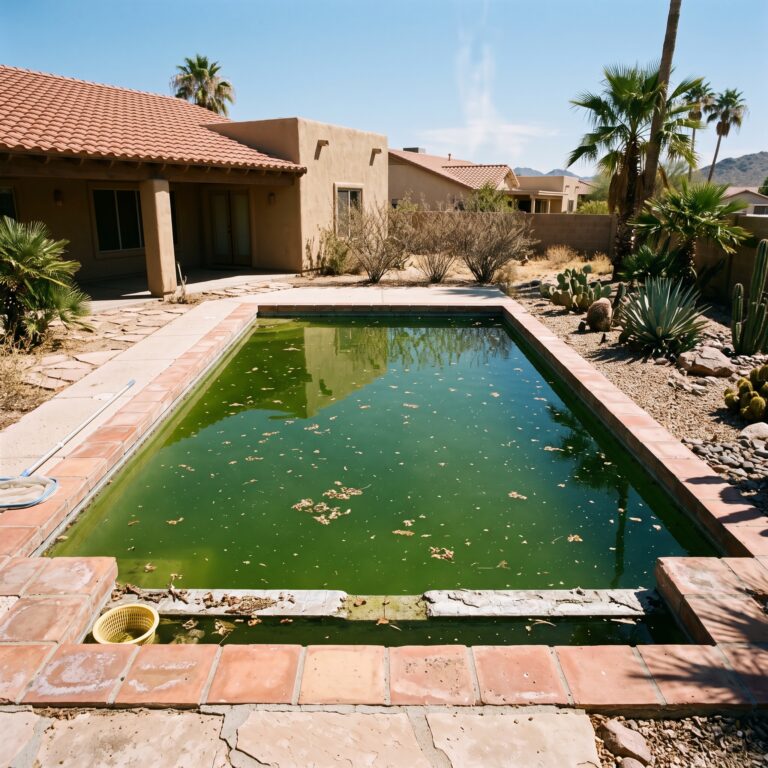
Living here in The Valley, you know the drill. That chalky white ring around your pool tiles isn’t some mysterious phenomenon – it’s Arizona’s hard water leaving its calling card. Every single day.
Hard water deposits form when calcium and magnesium minerals precipitate out of evaporating pool water. Arizona’s desert water packs more minerals than a vitamin store. When that water evaporates under our relentless sun (and trust me, it evaporates fast), those minerals don’t just disappear. They stick around, forming that crusty white buildup that makes your beautiful pool tiles look like they’ve been dusted with chalk.
The culprit? Calcium carbonate and calcium silicate – two minerals that love Arizona’s water supply almost as much as we love our backyard pools. This isn’t just cosmetic either. Left unchecked, this calcium scaling can damage your tile surface and create rough textures that harbor bacteria.
What causes white crust on pool tiles in Arizona?
Calcium buildup on your pool tiles starts with Arizona’s notoriously hard municipal water. Our water contains dissolved calcium and magnesium at levels that would make other states jealous (and not in a good way). When pool water evaporates – which happens constantly in our 115-degree summers – these minerals precipitate out and bond to your tile surface.
Two main types of calcium scaling pool tile damage occur here. First, calcium carbonate forms white, flaky deposits that scrape off relatively easily. Think of it as the “easy mode” of mineral buildup. Second, calcium silicate creates gray-white, rock-hard deposits that’ll test your patience and your elbow grease.
Evaporation rates in The Valley create the perfect storm for mineral precipitation. Your pool’s waterline becomes ground zero because that’s where evaporation happens most aggressively. During our brutal summer months, pools can lose 1-2 inches of water daily to evaporation.
Water chemistry plays a huge role too. When pH levels climb above 7.8 (common with our alkaline source water), calcium becomes less soluble. Add in high total alkalinity – another Arizona special – and you’ve got a recipe for rapid scaling.
Underground aquifers feeding our water supply have been filtering through desert rock for centuries, picking up massive amounts of dissolved minerals. Salt River Project and City of Phoenix water typically measures 200-400 ppm calcium hardness straight from the tap. Compare that to softer water regions at 50-100 ppm, and you’ll understand why we fight this battle constantly.
Temperature fluctuations make everything worse. Pool water at 85 degrees holds less dissolved calcium than water at 70 degrees. When your pool hits 95+ degrees (which it will, repeatedly), excess calcium starts looking for somewhere to land. Your beautiful tiles volunteer.
Monsoon season creates a constant wet-dry cycle that accelerates mineral precipitation. High humidity spikes followed by dramatic drops provide ideal conditions for calcium deposits to form and harden on tile surfaces.
“In The Valley, we see calcium buildup happening within weeks of a fresh fill. The combination of high mineral content and extreme evaporation rates creates conditions unlike anywhere else in the country.” – Desert Pool Systems technician with 15 years local experience.
What are the signs of calcium buildup on pool tiles?
Spotting calcium carbonate pool tile buildup isn’t rocket science, but early detection saves you major headaches. That obvious white or gray crusty ring right at the waterline represents advanced scaling – the problem actually starts much earlier.
Early warning signs include:
- Rough texture when you run your hand along the tile
- Chalky residue that comes off on your fingers
- Dull, cloudy appearance on previously shiny tiles
- White spots scattered across tile surfaces, not just at the waterline
- Grout lines turning gray or white
- Decreased water flow from skimmers (mineral buildup blocks pathways)
Calcium silicate pool tile deposits feel different – they’re harder, grittier, and often have a grayish tint instead of pure white. If you can scrape it off with your fingernail, it’s probably calcium carbonate. If you need a razor blade or pumice stone, you’re dealing with silicate.
Arizona’s afternoon sun creates specific buildup patterns. Buildup appears heavier on your south and west-facing tiles because those surfaces get the most direct heat, leading to faster evaporation and heavier mineral deposits.
Timing matters for removal difficulty. Fresh buildup (less than a month old) usually wipes away with standard pool brushes. Older deposits require more aggressive pool tile cleaning Arizona methods.
Different tile materials show calcium buildup differently. Porcelain tiles display white scaling clearly on their smooth surfaces. Natural stone (like travertine, popular in Valley pools) actually absorbs some minerals, making removal trickier. Glass tiles show deposits dramatically but require gentler cleaning approaches.
Visual inspection reveals buildup progression. Initial scaling appears as light film or haze on tile surfaces. Progressive scaling creates visible white streaks and patches. Advanced scaling forms thick, crusty deposits that change tile texture completely.
| Calcium Type | Appearance | Texture | Removal Difficulty | Timeline |
|---|---|---|---|---|
| Calcium Carbonate | White, flaky | Soft, chalky | Easy to moderate | 2-8 weeks |
| Calcium Silicate | Gray-white, solid | Hard, gritty | Difficult | 3+ months |
| Mixed Deposits | Layered colors | Varies by layer | Moderate to hard | Ongoing |
How can I remove calcium buildup from my pool tiles?
Fresh calcium carbonate deposits (the white, chalky stuff) respond to simple removal methods. A standard pool brush and some elbow grease often does the trick. Work in sections, scrubbing with circular motions while the tile is still wet.
Vinegar offers natural hard water line removal for stubborn carbonate buildup. Soak a cloth in undiluted white vinegar, press it against the affected area for 10-15 minutes, then scrub. The acetic acid dissolves calcium carbonate naturally without harsh chemicals.
Thick carbonate layers and calcium silicate require more aggressive approaches:
The razor blade method
Single-edge razor blades provide better control than double-edge versions. Use a new blade at a 45-degree angle, working slowly to avoid scratching the tile surface. This works best when tiles are dry and you can see deposit edges clearly.
Pumice stone approach
Natural pumice works better than synthetic versions for calcium removal. Wet both the pumice and the tile surface before starting. Gentle pressure only – you’re wearing down the calcium, not the tile. Test on an inconspicuous area first to check for scratching.
Commercial calcium removers
Pool-specific products contain acids designed to dissolve mineral buildup safely. Popular brands in Arizona include Bio-Dex Kleen It, Natural Chemistry Scale Free, and Orenda Scale and Metal Control. Follow manufacturer instructions precisely – these chemicals don’t mess around.
Muriatic acid treatment (advanced users only)
Severe silicate buildup may require diluted muriatic acid (1:10 ratio with water). Wear full protective equipment: goggles, gloves, long sleeves, and work in well-ventilated areas. Apply with acid brush, let sit briefly, then rinse immediately. Never use in enclosed spaces or mix with other chemicals.
Arizona-specific timing matters for cleaning effectiveness. Work during cooler parts of the day (early morning or evening) when cleaning products won’t evaporate before they can work. Plus, you won’t feel like you’re melting in direct desert sun.
Multiple treatment cycles typically prove necessary for established buildup. Don’t expect to remove years of scaling in one afternoon. Plan for 2-3 sessions, especially for hard calcium silicate deposits.
Professional-grade equipment options
Glass bead blasting removes calcium silicate without damaging tile surfaces underneath. Pressure washing with heated water cuts through mineral deposits faster than manual scrubbing. These specialized tools require experience to use safely.
Valley pool supply stores rent calcium removal equipment by the day. Expect to pay $50-100 for tool rental, plus deposit. Professional-grade equipment often produces better results than consumer tools for severe scaling.
How can I prevent calcium buildup on pool tiles in Arizona?
Prevention beats cure every single time, especially when dealing with desert water pool problems that never take a break.
Proper water chemistry management forms your first line of defense against calcium scaling pool tile damage. Keep pH between 7.2-7.6 (slightly lower than the standard 7.4-7.8 range). Arizona’s alkaline source water constantly pushes pH upward, so frequent testing and adjustment become necessary.
Total alkalinity monitoring requires religious attention in The Valley. Target 80-120 ppm instead of the typical 80-150 range. Lower alkalinity gives you more pH stability and reduces calcium precipitation significantly.
Calcium hardness requires careful balancing here. While you can’t eliminate calcium (it’s everywhere in our water), you can manage it effectively. Keep levels between 150-300 ppm. Higher levels accelerate scaling; lower levels can cause tile damage from water seeking to balance itself.
Maintenance schedule that works
Regular brushing prevents buildup from bonding permanently to tile surfaces. Brush waterline tiles 2-3 times weekly during summer months. Use a tile brush specifically designed for pools – those stiff bristles make a real difference on textured surfaces.
Weekly water testing becomes absolutely non-negotiable in Arizona. Test strips work for quick checks, but invest in a good liquid test kit for accurate readings. Digital testers give precise pH and chlorine readings but need regular calibration to maintain accuracy.
Monthly deep cleaning with mild acid wash prevents heavy accumulation from forming. Use a 1:20 muriatic acid solution, applied with acid brush, followed by immediate neutralization and thorough rinse.
Pool water chemistry management requires understanding Arizona’s seasonal variations. Municipal water treatment changes throughout the year, affecting your pool’s baseline chemistry.
Equipment solutions
Automatic pool covers reduce evaporation by 90%+, significantly slowing calcium buildup rates. If a full cover isn’t practical, even partial shade over the pool during peak sun hours helps reduce mineral concentration.
Water softener systems for pool fill water represent a significant investment ($2,000-5,000) but dramatically reduce mineral buildup long-term. Some Valley pool owners swear by this approach for severe hard water problems.
Fountain and waterfall features actually help prevent scaling by keeping water moving and reducing mineral concentration at tile surfaces. Constant circulation prevents stagnant areas where calcium loves to settle and bond.
Seasonal adjustments
Extreme heat waves require pool water chemistry adjustments. When temperatures hit 110+ for days straight, evaporation rates spike dramatically. Some pool pros recommend slightly lowering calcium hardness during these periods to compensate.
Drain and refill strategy works for severe mineral accumulation cases. Pool maintenance Arizona professionals typically recommend this every 3-5 years, depending on source water quality and usage patterns. Fresh water resets your mineral levels completely.
Monsoon season demands extra chemistry attention. Heavy rains dilute chemicals while dust storms add contaminants that can accelerate scaling. Test and adjust chemistry more frequently during summer storm season.
Is professional pool tile cleaning necessary for hard water stains?
Sometimes DIY methods hit their absolute limit, and that’s perfectly normal given Arizona’s challenging water conditions.
Professional pool tile cleaning Arizona services make financial sense when:
- Calcium silicate deposits cover more than 30% of your tile surface
- DIY efforts show no progress after multiple attempts
- Tile damage becomes visible from aggressive scrubbing attempts
- Time constraints prevent regular maintenance
- Grout lines need restoration beyond surface cleaning
Specialized equipment gives professionals major advantages over homeowner tools. Glass bead blasting removes the toughest calcium silicate without damaging tile surfaces underneath. Pressure washing with heated water and commercial-grade calcium removers cuts through buildup faster than any hand scrubbing method.
Cost breakdown analysis
Professional cleaning typically runs $3-8 per square foot of affected tile area. A full pool waterline cleaning averages $400-800, depending on pool size and buildup severity. This cost includes equipment, materials, and expertise.
DIY costs include cleaning products ($20-60), specialized tools ($30-100), and significant time investment. Factor in potential tile replacement if aggressive DIY methods cause permanent damage – that changes the financial equation quickly.
Professional services often include grout restoration work that DIY methods rarely address effectively. Separate grout replacement can cost $15-25 per linear foot when done as a standalone project.
When to call the pros
Arizona’s extreme mineral content and evaporation rates create conditions that eventually overwhelm home cleaning methods. Most pool owners benefit from professional cleaning every 18-24 months, combined with regular DIY maintenance between services.
Glass tile and natural stone materials require professional expertise for safe cleaning. These expensive materials can be permanently damaged by incorrect chemical application or overly aggressive scrubbing techniques.
Professional services provide maintaining optimal water chemistry guidance specific to your pool and local water supply conditions. They understand seasonal variations in municipal water treatment and can adjust recommendations accordingly.
Many professional services offer maintenance contracts that include regular calcium prevention treatments. These typically cost $100-200 monthly but can significantly extend time between major cleaning sessions.
“We see pools where owners tried everything – razors, pumice, acids. Sometimes the buildup is just too established for home methods. Professional equipment removes what hand tools can’t touch, and we do it without risking expensive tile damage.” – Valley Pool Restoration specialist.
Types of pool tile materials and calcium resistance
Different tile materials handle calcium buildup in distinctly different ways. Understanding your specific tile type helps you choose appropriate removal and prevention strategies.
Porcelain tiles
Most common choice in Valley pools due to durability and cost-effectiveness. Non-porous surface resists calcium absorption but shows surface buildup clearly. Easy to clean with most removal methods and handles acid treatments well without damage.
Natural stone (travertine, limestone)
Popular for authentic desert aesthetics but challenging for calcium control. Porous surface absorbs minerals deep into the material, making complete removal difficult. Requires sealed surfaces and gentler cleaning methods to prevent permanent staining.
Glass tiles
Stunning visual appeal but tricky for calcium management. Show calcium buildup dramatically due to reflective surfaces but can scratch easily during aggressive removal attempts. Professional cleaning often recommended to preserve surface integrity and appearance.
Ceramic tiles
Good middle ground between porcelain durability and natural stone aesthetics. Moderate porosity means some mineral absorption but easier cleaning than natural stone. Handle most DIY removal methods well without special precautions.
Tile surface texture affects calcium adhesion significantly. Smooth surfaces allow easier removal but show deposits more prominently. Textured surfaces hide early buildup but provide more surface area for calcium to bond permanently.
Advanced water chemistry for Arizona pools
Understanding the science behind calcium scaling helps you fight it more effectively with targeted pool water chemistry strategies.
Langelier Saturation Index (LSI)
This scientific formula predicts calcium precipitation tendency in pool water. Arizona pools should target slightly negative LSI (-0.3 to 0) to prevent scaling while avoiding equipment corrosion from overly aggressive water chemistry.
LSI calculation factors include: pH, total alkalinity, calcium hardness, water temperature, and total dissolved solids. All these parameters typically run high in desert conditions, making balance challenging.
Calcium hardness management
You can’t eliminate calcium from Arizona water sources, but you can manage precipitation through chemistry. Some pool owners use calcium sequestrants – specialized chemicals that bind calcium molecules and keep them in solution longer.
Popular sequestrant products include phosphonate-based chemicals and natural enzyme treatments. These work best as prevention rather than removal tools, requiring regular application during peak scaling season.
pH buffer systems
Consistent pH control becomes critical with high alkalinity source water throughout Arizona. Consider sodium bicarbonate for alkalinity adjustment and muriatic acid for precise pH reduction without shocking the system.
Valley pool professionals often recommend liquid acid feeders for automatic pH control systems. These inject small amounts of acid continuously, preventing pH spikes that trigger rapid calcium precipitation.
Seasonal calcium buildup patterns in Arizona
Understanding when calcium buildup accelerates helps you adjust maintenance schedules for maximum effectiveness and cost control.
Summer (May-September)
Peak buildup season arrives with extreme temperatures that increase evaporation rates and calcium precipitation dramatically. Daily water loss can reach 1-2 inches, concentrating minerals rapidly in remaining pool water.
Increase brushing frequency to daily during heat waves above 110 degrees. Test chemistry every 2-3 days instead of weekly intervals to catch problems before they become expensive.
Winter (November-March)
Slower buildup rates occur but don’t get complacent about maintenance. Cooler water holds more dissolved calcium in solution, but reduced evaporation slows precipitation significantly. Focus on pH control as reduced chlorine demand can cause pH drift upward.
Monsoon season (July-August)
Variable weather conditions create unpredictable chemistry swings that challenge even experienced pool owners. Heavy rains dilute carefully balanced chemicals while dust storms add contaminating particles. Storm runoff can introduce additional minerals from surrounding desert.
Test chemistry immediately after major storms or dust events. Brush extra thoroughly to remove dust and debris before they bond with existing calcium deposits.
Spring preparation (March-April)
Prime time for deep cleaning and comprehensive system checks before summer heat arrives. Remove winter accumulation before rising temperatures lock deposits in permanently. Consider professional cleaning services before peak scaling season begins.
Planning annual maintenance during spring saves money and prevents emergency cleaning costs during expensive summer months.
The Bottom Line
That white crust on your pool tiles isn’t going anywhere on its own – Arizona’s hard water ensures a constant mineral supply, and our desert sun provides the evaporation engine that deposits those minerals exactly where you don’t want them.
Consistency beats intensity when fighting calcium scaling in The Valley. Regular brushing and proper water chemistry prevent the rock-hard calcium silicate deposits that require expensive professional intervention. Start with simple calcium carbonate removal techniques, maintain pH on the lower end of the acceptable range, and don’t let buildup accumulate for months.
Professional cleaning makes financial sense for established scaling, but prevention through proper pool water chemistry management keeps those costs minimal. Understanding your specific tile material and adjusting techniques accordingly prevents damage during cleaning.
The desert doesn’t give you a break from hard water challenges, so don’t give calcium buildup one either. Smart maintenance today prevents expensive restoration tomorrow.
Quick-fire Q&A
How often should I clean calcium buildup in Arizona?
Brush waterline tiles 2-3 times weekly during summer months. Deep cleaning depends on buildup severity – monthly acid washes for light scaling, professional service every 18-24 months for heavy deposits. Arizona’s extreme conditions require more frequent attention than most regions.
Can I use CLR or other household calcium removers on pool tiles?
Stick with pool-specific calcium removers designed for aquatic environments. Household products often contain ingredients that affect water chemistry or can damage pool equipment when they inevitably get into the water during cleaning.
Why does my pool get calcium buildup faster than my neighbor’s?
Several factors accelerate buildup rates: pool orientation (south/west-facing get more sun), water source variations between suppliers, different tile materials, and maintenance frequency. Your neighbor might also have a water softener system or better chemistry control habits.
What’s the difference between calcium carbonate and calcium silicate buildup?
Calcium carbonate appears white and flaky, scrapes off with fingernails, and responds well to vinegar treatment. Calcium silicate looks gray-white, feels rock-hard, and requires aggressive removal methods like razor blades or professional equipment for effective removal.
Should I drain my pool to get rid of severe calcium buildup?
Draining removes the mineral source but doesn’t clean existing tile deposits that have already formed. Clean the tiles first using appropriate methods, then consider partial water replacement if calcium hardness exceeds 400 ppm. Full drains every 3-5 years help reset water chemistry in Arizona’s challenging conditions.
Can calcium buildup damage my pool equipment?
Absolutely. Calcium scaling clogs skimmer baskets, reduces water flow throughout the system, and can damage pump impellers over time. Heat exchangers and salt cell generators are particularly vulnerable to mineral buildup and suffer reduced efficiency that increases operating costs.