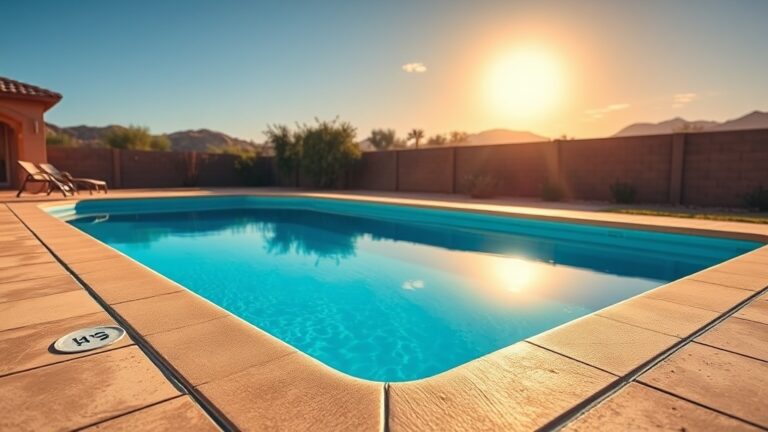
Living in Phoenix, Arizona means dealing with some unique challenges – and pool calcium buildup tops that list. Phoenix’s notoriously hard water combined with our relentless heat creates the perfect storm for those stubborn white deposits that make your pool tiles look like they’ve been hit by a monsoon of mineral deposits.
You’re not alone in this battle. Every pool owner in Phoenix deals with calcium buildup – it’s practically a rite of passage here in the desert. The question isn’t whether you’ll get it.
What does calcium buildup on pool tiles look like?
White, chalky deposits that stick to your pool tiles like desert dust after a haboob. That’s calcium buildup in its classic form.
These deposits typically show up as crusty, white or grayish scales along your waterline tiles. In Phoenix pools, you’ll spot them first where the water meets the tile – that’s where evaporation hits hardest under our brutal sun. The buildup starts thin, almost like a film.
On darker tiles, calcium deposits stand out like chalk on a blackboard. Light-colored tiles? The buildup blends in initially, making it sneaky until it’s thick enough to feel. Hard water stains on pool tile Phoenix residents deal with often have a slightly different texture – more streaky and film-like compared to the chunky calcium carbonate deposits.
The worst part? These deposits don’t just sit pretty. They create rough surfaces that harbor bacteria and algae, turning your maintenance routine into a nightmare. Plus, they make your expensive pool renovation look cheap and poorly maintained.
| Severity | Appearance | Texture | Difficulty of Removal |
|---|---|---|---|
| Light buildup | Thin white film | Slightly rough | Easy (DIY methods work) |
| Moderate buildup | Thick white patches | Very rough, bumpy | Moderate (pumice stone needed) |
| Heavy buildup | Crusty, thick layers | Like concrete | Hard (professional tools required) |
Here’s what really gets pool owners frustrated: calcium buildup in Phoenix happens fast. Our water evaporates so quickly that minerals concentrate rapidly.
How do I remove calcium buildup from my pool tiles in Phoenix?
Start with the gentlest method first – you don’t want to damage your tiles trying to be a hero.
For light buildup, a standard pool brush and some elbow grease might do the trick. But let’s be honest – in Phoenix, “light” buildup is rare. Our hard water doesn’t mess around.
Pumice stone method works for moderate deposits. Wet the pumice stone thoroughly (dry pumice will scratch your tiles faster than you can say “experienced professionals recommend”), then gently scrub the calcium deposits. Keep both the stone and tile surface wet throughout the process. This method removes most calcium deposits on pool tile Phoenix homeowners encounter without calling in the professionals.
For stubborn deposits, you’ll need muriatic acid – but handle this like you’d handle a scorpion in your backyard. Mix one part muriatic acid with two parts water. Apply with a brush, let it sit for a few minutes, then scrub and rinse thoroughly. Wear protective gear and ensure good ventilation.
Professional glass bead blasting tackles the heavy stuff. Companies here use specialized equipment that strips calcium without damaging your tile surface. This method removes even the thickest layers.
Pool owners I’ve talked to swear by regular maintenance over major interventions. Weekly brushing prevents the buildup from getting a foothold, especially during our peak summer months when evaporation rates spike.
The key? Don’t wait until your tiles look like they’re wearing white sweaters. Address buildup early, and you’ll save time and money.
What causes calcium buildup on pool tiles?
Phoenix water is loaded with minerals – it’s like swimming in dissolved rocks.
Our municipal water supply contains high levels of calcium and magnesium, creating what locals call “liquid limestone.” When pool water evaporates (and it evaporates fast here – we’re talking about losing 2+ inches per week in summer), those minerals get left behind on your tiles like salt on the rim of a margarita glass.
High pH levels accelerate the process. When your pool’s pH climbs above 7.6, calcium carbonate becomes less soluble and starts precipitating out of the water. Combine that with Phoenix’s intense UV exposure and constant evaporation, and you’ve got a calcium factory running 24/7.
Temperature plays a huge role too. Our pool water temperatures routinely hit 90°F+ during summer, and hot water holds less dissolved minerals than cold water. As the water heats up throughout the day, mineral deposits intensify.
Pool maintenance Phoenix professionals see the same pattern repeatedly: pools that aren’t regularly balanced develop calcium buildup faster. Inadequate circulation creates dead zones where calcium concentrates and deposits more readily.
Here’s something most pool owners don’t realize: using calcium-based pool chemicals (like calcium hypochlorite shock) in an already mineral-rich environment accelerates buildup. It’s like adding fuel to a fire that’s already burning hot.
Even your pool’s surface material affects calcium deposition. Rough surfaces like pebble-tec provide more spots for calcium to grab onto compared to smooth tiles, which is why pool resurfacing Phoenix companies often recommend specific finishes for our hard water conditions.
How much does it cost to clean calcium off pool tiles in Phoenix?
Professional calcium removal runs $3-8 per linear foot for standard cleaning methods.
For a typical residential pool (roughly 150 linear feet of waterline tile), you’re looking at $450-1,200 depending on the severity of buildup and method used. Light cleaning with brushes and chemicals sits on the lower end, while glass bead blasting for heavy deposits hits the upper range.
Pool acid washing Phoenix services charge by the job, often starting around $300. If you’re dealing with calcium throughout your pool (not just tiles), this becomes more cost-effective than spot treatments.
DIY costs are significantly lower but require more time investment. A pumice stone runs $5-10, muriatic acid costs $8-15 per gallon, and you’ll need proper safety equipment ($30-50 for gloves, goggles, and respirator). Total DIY investment: under $100 for supplies that’ll handle multiple cleaning sessions.
Glass bead blasting represents the premium service. This method completely strips calcium without tile damage, making it worthwhile for expensive tile installations or severe buildup that’s been neglected for years.
“Pool owners wait too long to address calcium buildup, turning a $200 maintenance job into a $1,000+ restoration project” – say experienced practitioners in the Valley’s pool service industry.
Maintenance contracts typically include basic calcium prevention as part of weekly service ($80-120 monthly), but severe removal requires additional charges. Some companies offer package deals combining pool tile cleaning Phoenix AZ with regular maintenance at discounted rates.
Factor in prevention costs too. Proper water balancing chemicals run $20-40 per month. It’s classic desert wisdom – an ounce of prevention beats a pound of cure, especially when that cure involves scraping concrete-hard deposits off your tile in 110°F heat.
What are the best methods for removing calcium deposits from pool tiles?
Glass bead blasting delivers the most thorough results without damaging your tile investment.
This professional method uses recycled glass media propelled at controlled pressure to strip calcium deposits completely. Unlike sandblasting (which can etch tiles), glass beads remove buildup while preserving your tile’s original finish. Companies throughout the region have adopted this technique.
Chemical removal works well for moderate buildup. Muriatic acid remains the go-to choice, but newer calcium-specific removers offer safer handling. Products like Bio-based on industry surveys & industry specialists note provide effective results without the harsh fumes and skin risks of traditional acid treatments.
For ongoing maintenance, pumice stone scrubbing hits the sweet spot between effectiveness and convenience. Wet pumice removes fresh deposits without scratching. The key is consistency – weekly attention prevents buildup from reaching professional removal territory.
Pressure washing combined with specialized detergents tackles stubborn deposits on larger tile areas. This method works particularly well on textured tiles where calcium gets trapped in surface irregularities. Professional equipment delivers 3,000+ PSI while controlling water temperature for optimal removal.
Here’s a game-changing approach many Phoenix pool owners are adopting. Regular application of calcium inhibitors (like according to experienced practitioners industry specialists note) creates a protective barrier that prevents deposits from bonding to tile surfaces. It’s like applying sunscreen before heading out into our desert sun.
Some innovative services now offer sonic cleaning – using ultrasonic frequency to break calcium bonds without physical abrasion. While newer and more expensive, this method preserves even the most delicate tile finishes while achieving thorough removal.
Pool scale removal Phoenix professionals increasingly combine these methods. This strategy maximizes results while controlling long-term costs.
The bottom line? Match your method to your buildup severity and tile type. Expensive natural stone requires gentler approaches than standard ceramic tiles, and heavy buildup demands professional intervention regardless of tile type.
The bottom line
Phoenix pool calcium buildup isn’t just an aesthetic issue. Our desert climate and hard water create the perfect storm for rapid calcium accumulation, but the right approach keeps your pool looking pristine year-round.
Start with prevention through proper water balancing, tackle light buildup immediately with pumice stones, and don’t hesitate to call professionals for heavy deposits. The cost of regular maintenance beats the expense of major restoration every time.
Your pool is an investment in desert living – protect it like one. Because nothing beats jumping into crystal-clear water.
Quick-fire Q&A
Can I prevent calcium buildup completely in Phoenix?
You can’t eliminate it entirely – our water is too mineral-rich. But regular water balancing, weekly brushing, and calcium inhibitor products significantly slow the process.
Is calcium buildup dangerous to swimmers?
Not directly dangerous, but it creates rough surfaces that can harbor bacteria and algae. Plus, those sharp edges from thick buildup can scrape skin pretty easily.
How often should I clean calcium off my tiles in Phoenix?
Light maintenance weekly, thorough cleaning monthly is recommended. Don’t let it accumulate for months.
Will calcium buildup damage my pool tiles permanently?
Thick, long-term buildup can etch into porous tile surfaces, especially natural stone. Early removal prevents permanent staining or surface damage.
Can I use CLR or other household calcium removers on pool tiles?
Stick to pool-specific products. Household cleaners often contain chemicals that can harm pool chemistry or surfaces. When in doubt, test in an inconspicuous area first.